Mathematical and computational modeling is a key focus of the Med Center's activities. It aims to represent, analyze and understand complex systems at different scales. This approach is based on multi-scale frameworks articulating microscopic, mesoscopic and macroscopic descriptions, enabling individual interactions to be linked to collective dynamics and emergent behaviors.
In this context, simulation methods play an essential role. These include agent-based simulations (in collaboration with the France center), continuous models based on differential equations, stochastic models, and hybrid approaches combining several levels of description. These tools enable us to understand heterogeneous, non-linear and tightly coupled systems, while providing relevant frameworks for analysis, decision support and prediction in a variety of contexts.
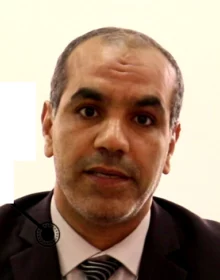
This theme is based on solid mathematical foundations, in particular the analysis of dynamic systems. Particular attention is paid to models incorporating differential equations with delay, enabling memory effects and delays in system evolution to be taken into account. In this respect, the pioneering work of Prof. Khalil Ezzinbi (winner of several prestigious African prizes), has made a significant contribution to the development and analysis of these models, particularly with regard to their stability, asymptotic behavior and applications to complex systems. In addition, the center is developing innovative approaches to the kinetic theory of active particles, inspired by statistical physics (such as Boltzmann equations or transport equations). These approaches enable us to rigorously link individual behaviors to emergent collective phenomena, and to study processes such as aggregation (in collaboration with Laboratoire JLL, Paris 6), diffusion, structure formation and self-organization dynamics. They have applications in many fields, including the modeling of biological systems, social dynamics, traffic flows and swarm-inspired multi-agent systems (collaboration with the University of Granada, N. outada et al 2025 ), where simple local rules lead to complex collective behaviors. At the same time, population dynamics modeling is an area dedicated to studying the evolution of populations and their interactions in various contexts. These models take into account the mechanisms of birth, mortality and migration, as well as the environmental influences that structure population dynamics over time. They also integrate optimization and control issues. These issues are addressed in the work of M. Khaladi, H. Hbid and colleagues.
Artificial intelligence will first be used in a classical way for traffic video analysis, through the development of embedded deep learning algorithms integrated into camera sensors.
These tools will be used for vehicle counting and tracking in Marrakech, providing data for agent-based urban mobility simulations and the Marrakair platform.
They will also support the estimation of congestion and pollution levels and allow comparison with Google Traffic data, enabling generalization to other urban areas.
In parallel, research will explore hybrid approaches combining symbolic and sub-symbolic AI, inspired by projects such as NAWRAS, eCOL+, and AIME.
These projects involve extracting information from digitized text collections. For example, named entity recognition (NER) models are used to extract species names and descriptors from biodiversity datasets, organizing the results into knowledge graphs.
Other work focuses on analyzing legal texts using classification and sequence labeling models, enabling structured information extraction and intuitive visualization.
The AIME project has also enabled interdisciplinary collaborations (AI, biology, ecology), particularly in applying AI to marine ecosystem monitoring through image-based object detection and classification.
Research is also ongoing on graph neural networks to better understand animal movement and interactions, such as shark behavior.
While sub-symbolic AI currently dominates, a partnership with the Computational Law and Machine Ethics (CLAiM) group at the University of Luxembourg aims to combine symbolic AI (reasoning, logic, argumentation) with sub-symbolic methods to develop hybrid approaches for analyzing regulatory texts.
An Erasmus mobility project has been submitted to support collaboration between the two institutions.
The center is developing work around sensors and data acquisition, in connection with major issues such as public health, water resource management and urban mobility. The first axis focuses on the study of the spread of epidemics through population mobility (in relation to urban dynamics modeling). This will involve analyzing how certain components of urban mobility, such as the public transport network, contribute to the spread of an epidemic such as COVID-19. The aim will be to formulate recommendations to authorities on the measures to be applied in public transport networks to limit the spread of epidemics in the absence of containment. A second axis, linked to water management modeling, will focus on epidemic control, data acquisition and software sensors for viral and bacterial detection in wastewater, with potential applications to environmentally-transmitted diseases such as liver fluke in slaughterhouses and bilharzia.
Water management, and in particular the reuse of wastewater, is a fundamental issue in Morocco, as in the rest of the world. For example, the water table in the city of Marrakech would be depleted in fifteen years' time if current practices were to continue. It is therefore important to propose solutions to Morocco, of course, but also to the countries of southern Europe and the Mediterranean basin. The research carried out at the center will lead to computer simulation methods for evaluating decision-making scenarios, taking into account external forcings: climate, anthropogenic activities, etc. This research will focus on (1) simulating the performance of wastewater treatment systems using learning methods (El Alaoui et al. 2023), biodegradation of organic matter, indicators of faecal contamination, pathogen indicators or the use of wastewater to anticipate epidemics; (2) modelling the biology of porous media (Elghandouri et al. 2024): context of fertilizers, phosphate biodegradation, bacteria-plant symbioses, groundwater, etc. On urban aspects, the main focus will be on daily mobility, with agent-based modeling (on GAMA) of urban mobility dynamics, in particular on the public transport network, with an application to the city of Marrakech that can then be generalized to major Moroccan cities. The study covers the city's current network, including buses and large cabs, as well as the planned BHNS (Bus à Haut Niveau du Service) network. Analysis of the dynamics of this complex network aims to estimate the contribution of each mode of transport to satisfying urban travel demand, and to propose strategies for increasing the attractiveness of public transport. This model will be complemented by mathematical and computational optimization work on the interaction of the different public transport modes (Bus-Taxi-BHNS), combining multimodal optimization algorithms with spatial multi-agent simulation to propose solutions for improving public transport service quality. The specific optimization objective is to reduce waiting and travel times. In connection with theme 4, an interactive 3D model (Marrakair V2) will be developed to enable the exploration of road traffic and public transport strategies based on these models. The model will be used to observe the relationship between congestion on Marrakech's roads and air pollution generated by vehicles in synthetic traffic. The simulation results will be impacted by user-controlled parameters (speed limit, max and min congestion levels, diesel vehicle rate, proportion of two-wheelers, etc.) and will be fed by data from specific sensors: AI-enabled video cameras for the collection and analysis of road traffic data, and sensors measuring the main pollutants (PMx, COx, NOx) installed at specific points in the city, to enable comparison between the pollution indicators estimated by the simulations and those measured by the sensors.